

Operating models: Finding the one to suit your resource
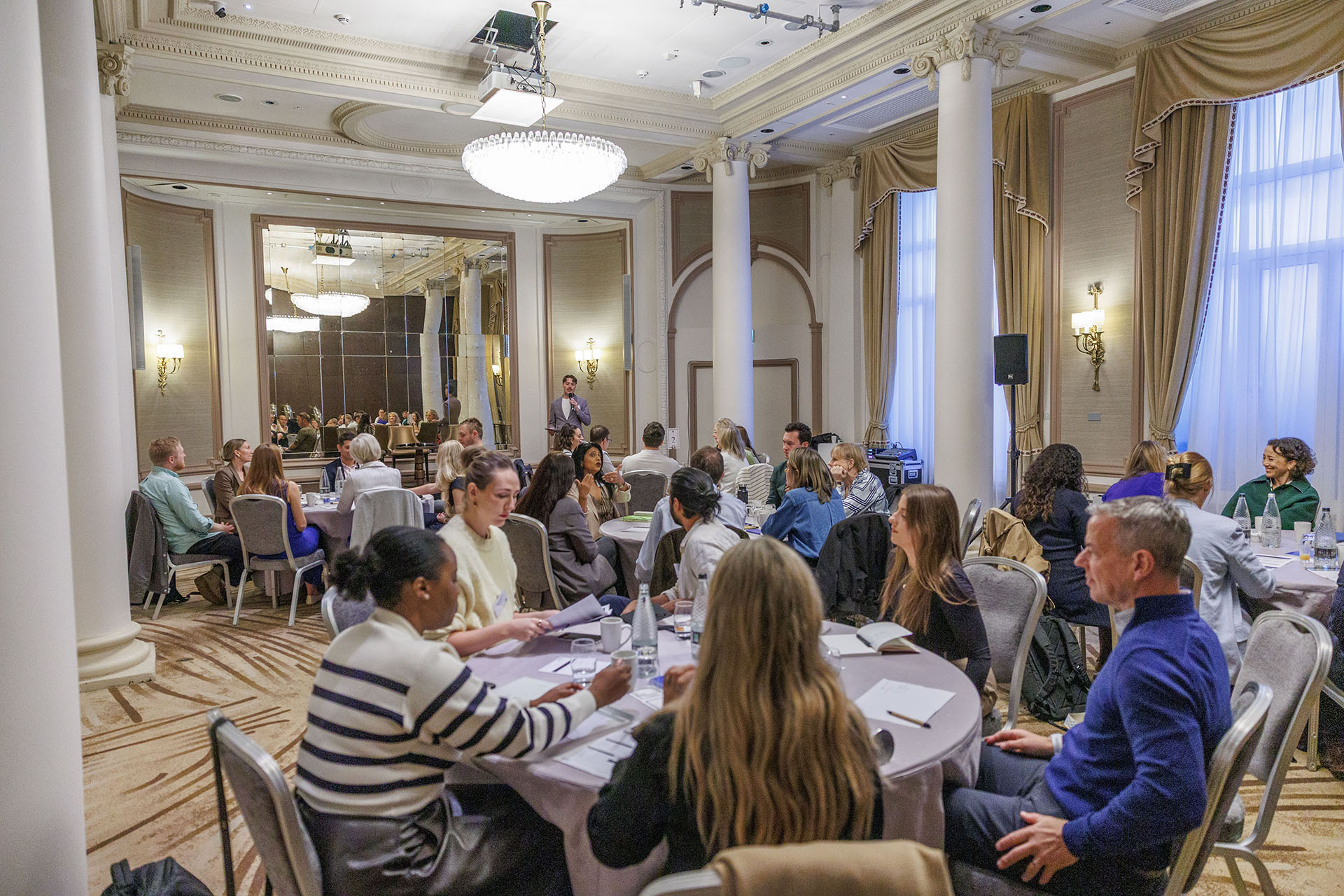
Whilst there was consensus that organisations need some form of central ABM leadership so that skills and processes can scale, attendees reported a variance in operating models that is, by-and-large, determined by ABM maturity and depth of available ABM-specific expertise. The core models each have strengths and trade-offs, while deal-based marketing seems to be gaining ground:
- Centre of Excellence: Positioned as an antidote to ABM scaling across one-to-few and one-to-many (until eventually it ceases to be effective), the CoE ensures a nucleus of specialist ABMers, able to set frameworks, guidance and training, and ensuring consistency (ergo quality) company-wide – especially useful where ABM is being deployed by generalists. The concerns were about where that knowledge can become over-centralised, and when a CoE hands its tactics to marketers who aren’t ABM specialists, those tactics tend to drift down priority lists.
- Field-led: Aligning ABM specialists with specific geos or industries allows practitioners to sit near the accounts and sales teams they work with, and to build the intimacy that strategic ABM depends on. The trade-off is consistency and divergence (potentially ending with salespeople carrying out ABM themselves – a premise that left some the ABMers around me feeling queasy) so tight governance is a prerequisite.
- Deal-based marketing (DBM): A number of participants spoke to narrowing their focus rather than scaling ABM. Deal-based or pursuit models tie investment directly to live opportunities, such as active bids or RFPs, with success dependent on continuous scanning of intent data to spot those opportunities early. The sentiment felt clear – spend is easier to justify, and roles focused on immediate revenue are better protected when headcount is under pressure (a reality for many in the room). The open question is how DBM sits alongside ABM’s longer-term role.
Regardless of preferred operating model, though, the room agreed that in an ideal (read: properly resourced) world, ABM should be led by specialists. ABM calls for a unique skill set – including the deep experience of working with sales as business partner – which other marketers are unlikely to share.
The reality, though, is that not every organisation is resourcing ABM in line with that ideal, with generalists or marketers from other specialties (e.g. events) often relied on to run ABM campaigns (CoEs are of obvious value in cases like this).
In fact, a narrow majority of the room expected ABM headcount to fall over the next 12-24 months, even if a reset eventually follows. In several organisations, AI is being pursued aggressively and explicitly at the expense of ABM roles. But replacing headcount is one thing – replacing capability is another. So what can AI actually deliver in ABM today?
AI in ABM: rewriting the role of account-based marketers
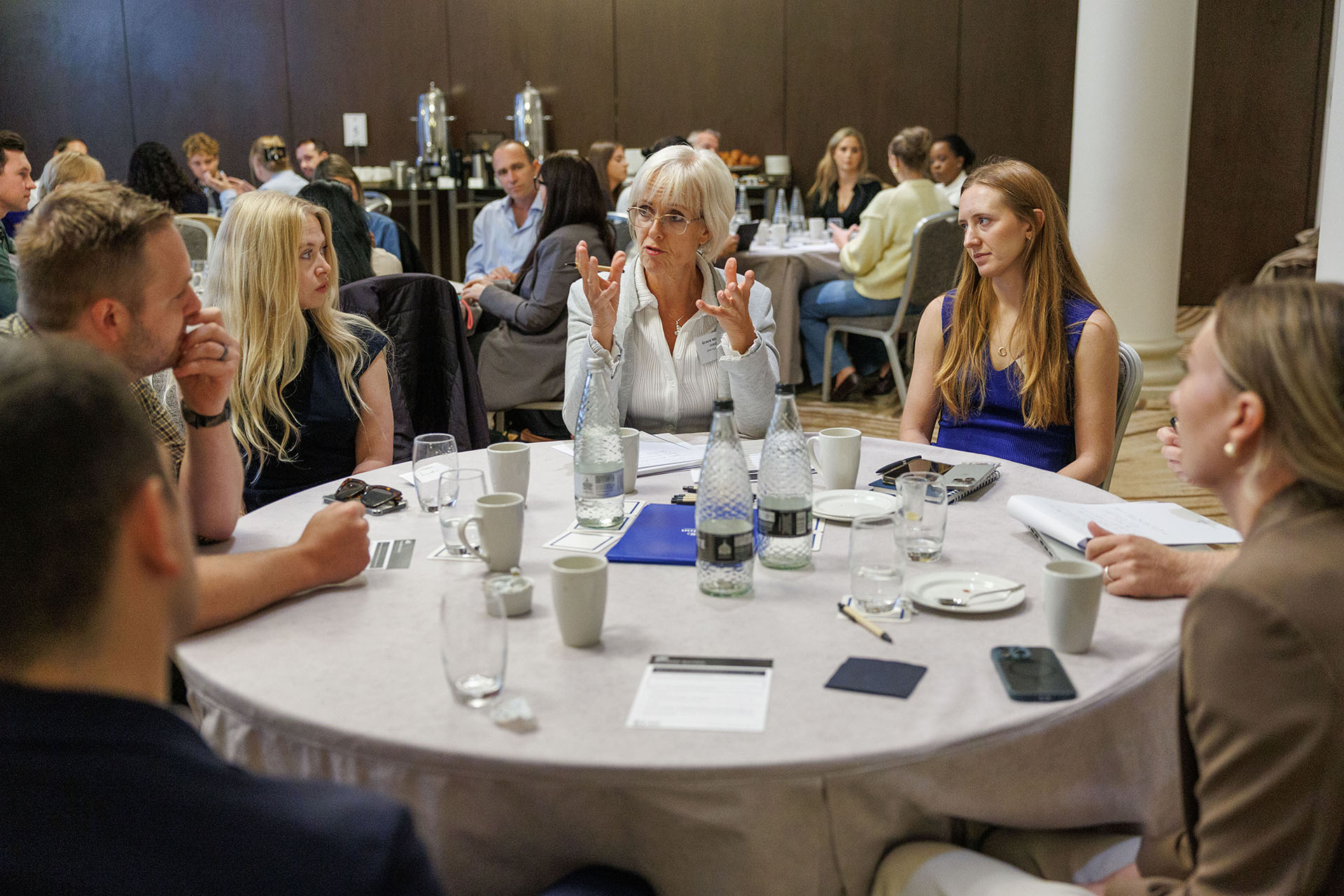
The most pressing question was how to move AI from task-based support, where it helps individuals do discrete jobs faster, to embedded workflows, where AI runs continuously in the background and moves work forward on its own. Our two panelists sat on either side of that line.
- In one organisation, ABMers are already running up to 50 agents stitched together. The ambition is to set them running, shut the laptop and spend more time helping the ABMer become more strategic and connected, dialling up the relationship with sales, and engaging directly with clients.
- Our other panellist described a stage more typical of the room: early investment and enthusiasm brought strong initial adoption, but embedding AI into day-to-day processes has been harder, and the benefits have plateaued, often while the organisation’s (and CMO’s) expectations keep rising. Closing the gap between what’s promised and what’s possible was front of mind for most.
Tellingly, the most advanced adopters aren’t cutting ABM teams but growing them – the implication being that the human skills of relationship building and strategic thinking are prized in organisations where the AI workflows exist to scale the delivery. It was organisations earlier in their AI journey that seemed most inclined to treat AI as a substitute for people, often before the workflows that could justify it are in place.
Across the room, key areas of focus were: which areas AI is most suited to helping, and the skills we need to thrive in the new paradigm:
Where AI is helping today
- Intent and signals: teams are bringing intent monitoring in-house and using it to get the right people to the right content at the right moment. That is lifting conversion rates, and continuous scanning is helping to flag likely RFPs before they slip past (especially important for those adopting DBM).
- Insight: AI is proving useful for researching company priorities and strategies, helping teams sharpen messaging and outreach, and, in cases, buyer group mapping. Where it still falls short is the final mile: specific buyer insight and the connection points that make outreach land with an individual – a gap I know well from leading on account intel at Ei.
Insight as a live input: at Ei, we’re increasingly seeing (and tailoring our output to) insight being fed straight into the AI-enabled systems teams use day to day, not just delivered in reports. Its value then rests on the quality and distinctiveness of that data, and on how well those systems, and the people using them, are governed to apply it.
The skills ABMers will need
- Governance: as AI-generated data and content reach time-poor sales teams, marketers are becoming governors of output as well as its creators. That includes sales, who often scale ABM badly when they go it alone with AI. Few marketers have been trained for this, but it is becoming key.
- Strategy and creativity: this is where AI often falls short, and an area where the room sees human value persisting.
- New disciplines: fluency in LLMs, AEO and generative engine optimisation are essential as clients themselves use AI to filter what they receive (and avoid “slop”).
- The fundamentals: for those early in their careers, the advice was consistent: stay curious, learn how research actually works, and check what AI tells you. One table suggested limiting juniors’ AI use until they have mastered the basics.
What AI can’t replicate is human connection; the room shared a renewed emphasis on events and experiential, which is becoming a core ABM capability again, and a full-circle moment we return to below.
Events and experiential: AI-powered, but human by design
More events, or better events?
Events are growing, but so is scrutiny. Most leaders at ABM Club are committing to more events, though there’s a subset that are focusing on fewer, better activations events – being more discerning about where they invest – which is reflective of broader market trends (see our 2026 B2B Events Intelligence Report).
Customers are becoming more selective too, raising the bar for the experiences worth attending. Within this context, personalisation matters, but it still has to feel human. AI can remove much of the legwork involved in tailoring events, agendas and experiences, but there is an important distinction: an event can be AI-powered but can’t feel AI-powered – customers are getting better at avoiding irrelevant outreach.
Proving the return
Whether teams run more events or become more selective, they face growing pressure to demonstrate return, and measurement remains a challenge for event activation generally and within ABM. Again highlighted in our report, only 21% of B2B marketers measure event ROI with confidence, and the default 14-day attribution window in most marketing automation platforms captures only around 20% of an event’s impact.
One practical suggestion from the room was to use QBRs with sales teams to quantify how ABM activity, including events, contributed to winning a deal. Connecting event engagement to account outcomes is Ei’s heartland (and is a conversation we’re always happy to continue!).
ABM has been reinvented before and is being reinvented again. Operating models will keep evolving and AI will keep reshaping the work, but the room agreed on what still matters most: specialist expertise, committed sales partners and the human connection that, so far at least, AI can’t replicate.
About the Author: Christopher Hutchings
