
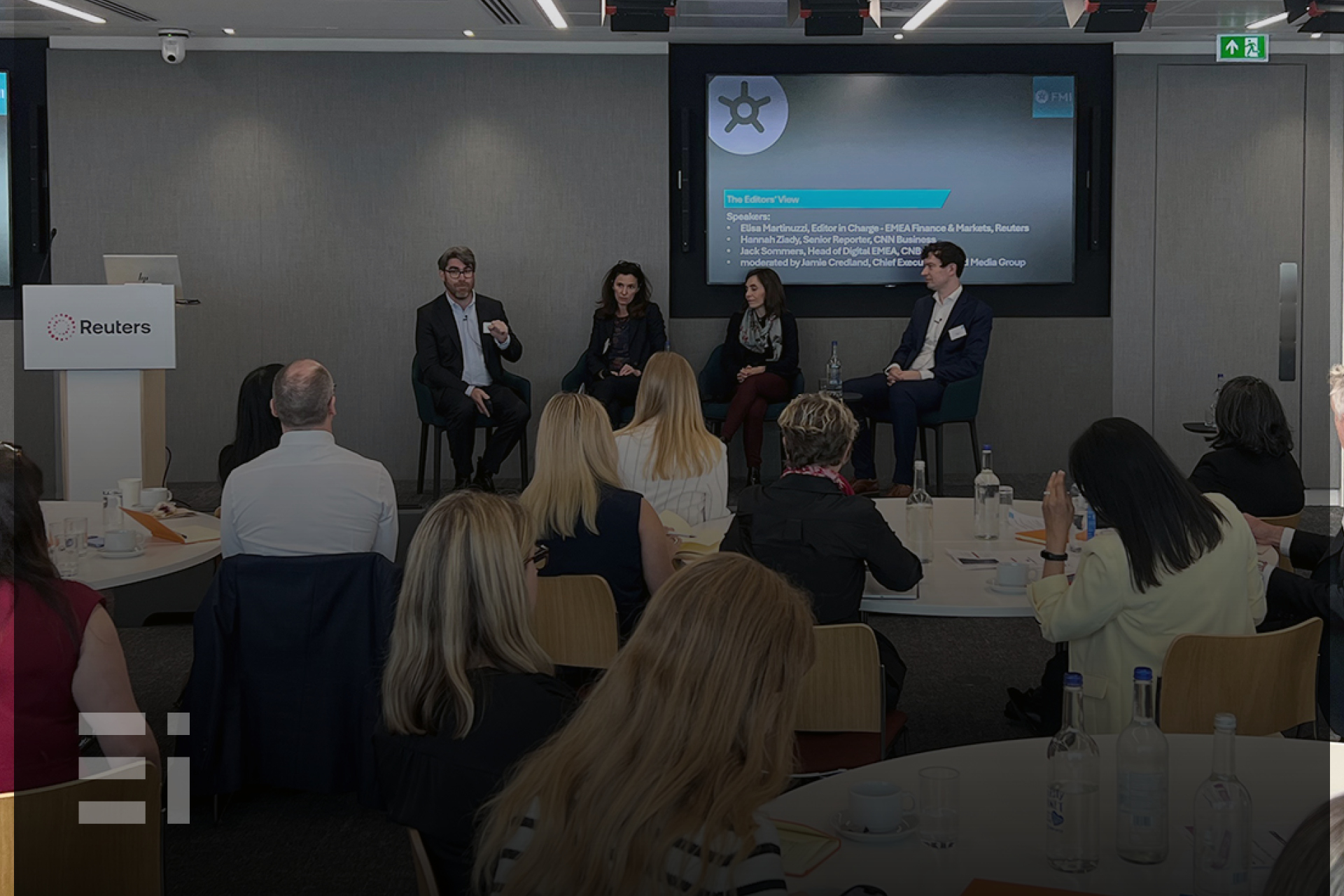
AI dominated the agenda – as it has done for the past few years – but it was different in 2026. Comments from the stage and the floor were overwhelmingly enthusiastic about the potential of AI. I left with a sense of a community excited by the possibility. But, privately, a fear that somewhere along the journey to mass AI adoption, we have silenced the AI doubters. And what I took from the conference was that we need listen to them, if we are to adopt AI wisely.
Are we confusing efficiency with excellence?
Throughout the day, we were frequently reminded that AI enables us to get more done. We can all be so productive now! Dominique Rose Van-Winther of Final Upgrade presented the most efficient model – we get AI to do 90% of the work, and then humans add the 10% gloss at the end, saving ~25 hours of work a week. This sounds compelling. But gloss is a shiny layer, it covers cracks. It doesn’t make something good.
The judgement to properly evaluate an AI output has to be earned. You do this by taking time to execute the hands-on work, whether it is wrestling with a dataset or rewriting and rewriting the paragraph that doesn’t read right. This builds familiarity with a skill or subject so you can critically evaluate your output. Doing this work isn’t inefficient. It’s how expertise is built.
Several speakers noted that originality and excellence are key to high-performing marketing. What AI delivers us is, in principle, the opposite. AI outputs are by design the most probable response. They are the distilled average of everything that came before. In reaching for AI reflexively, before we’ve done our own thinking, do we participate in the most widespread form of groupthink ever invented?
Colin Fu, Associate Professor in Marketing Science, UCL, challenged the room, asking why we “let AI replace our critical thinking”? He pointed out that the tool we’re using to move faster is quietly narrowing the range of ideas we’re capable of producing. A recent whitepaper by Wharton termed this ‘cognitive surrender’.
Aside from this dive into the trade-offs of AI use, many practical points of advice on Financial Services Marketing were shared by the panel.
Delivering AI adoption at scale is complicated.
Simon Murray of Adobe noted that AI technology is moving faster than most firms can operationalise it. Dominique Rose Van-Winther identified three things that slow AI adoption, none of them technical: the Visibility Bind (nobody wants to be able to tell you used AI), the Reward Bind (productivity gains can feel like punishment if they result in more work), and the Trust Bind (nobody wants to train the thing that replaces them). All valuable considerations for marketing leaders tasked with scaling AI use.
Trust is changing shape. Focus on the customer to keep it.
My colleague Caroline Joyce of Ei Advisory explored the nature of client trust in conversation with Gavin Horner of NatWest Group and Oliver Harrison, former Head of Marketing at Citi Commercial Bank. Framed by data showing that 89% of B2B Buyers used generative AI, they debated how we deliver trust – or brand promise – through AI chat and to a millennial audience for whom peer review is vital. The panel concluded that trust is moving from perception-based to verified and data-backed, highlighted the distinction between emotional trust and structural trust, and asked whether we now need to design for AI trust as well as human trust. Their conclusion? Focus on the customer’s needs, and the rest follows. Brand is a promise owned by the whole enterprise, not by marketing alone.
AI is the new front door, and we need a new content strategy to manage this.
Simon Murray noted that many marketers have moved away from using AI to create endless content. Less is more. But the new challenge is to make content findable and citable by humans and LLMs. We also need to pay attention to third-party platforms like Reddit, which shape how LLMs surface our brand. The answer? Create a few pieces of distinct, original authority content and distribute these in multiple formats across multiple channels. More can still be more, if every piece carries a consistent voice.
How to earn attention in a noisy world.
It’s not all about content. Building a community that trusts your thinking will amplify your message beyond your reach and generate the authority signals LLMs are looking for. Christoph Woermann of Deutsche Bank and Sapna Kandukuri of LSEG made this case well.
Paul Fletcher of Schroders added a practical layer. Arm your BD team with your authority content, so your marketing message resonates across the sales process. Alison Harbert of Lloyds noted that where you place your brand signals authority as much as the content itself. Jamie Credland, Chief Executive of World Media Group, gave that point an edge: spending on content placement with trusted media brands has fallen 30% amongst big corporates.
The word nobody said
I didn’t hear the word hallucination once all day. Not once. And yet the global news is littered with examples of corporates laid low by inattentive AI use. Financial Services is more heavily regulated than most industries, so the lack of anyone putting brakes on the AI juggernaut was extraordinary.
Perhaps there is a dynamic at industry conferences which rewards enthusiasm. No one wants to come across as the dinosaur in the room. But the dissenter is not a dinosaur. They can be the bravest, most honest voice.
Let’s make sure we allow questions and dissenting voices to be part of our AI adoption strategy. AI technology is remarkable. We are making use of it at Ei Advisory and the opportunity is real. But the most valuable capability we can protect right now is our originality and critical thinking, patiently honed through years of hands-on work.
We also need clear eyes, rigorous checking, and deep familiarity with our craft to spot when the gloss is hiding a crack.
Ei Advisory provides B2B sales and marketing intelligence that helps companies reach, engage and convert customers. Powered by a combination of expert human analysis and our proprietary technology, Mercury, we serve clients globally from offices in London and New York. To find out how we can help you build trust and relevance in complex markets, contact Tony Jarvis, Caroline Joyce or contact us.
Find out how Ei Advisory’s messaging intelligence can help your team communicate with more clarity and impact.
About the Author: Tony Jarvis
